What the End of Middle School Looks Like in a School Focused on Competencies, Concepts, and Character

The 8th Grade National Evaluation is “too narrow and too punctual,” said the Minister of Education, Daniel David, in a recent statement. Behind this remark lies a much broader conversation that directly concerns children: what exactly are we measuring through exams, and how much of who they truly are is reflected in the results?

Raluca Tarcea, Director of Experience & Strategic Development at Avenor College, examines this narrow path in comparison with the Avenor educational model — a school that focuses on developing real competencies, fostering conceptual understanding, and nurturing each child’s character.

A necessary, albeit uncomfortable, conversation

For years, the National Evaluation has been treated as a given. “This is how it’s done; this is how we went through it; this is how the system is used to functioning.” Two written tests, Romanian and Mathematics, determine not only which high school a child will attend for the next four years, but often also influence the trajectory of their future.

Recent statements by the Minister of Education highlight a truth already documented by studies and specialist reports: in its current form, the National Evaluation no longer aligns with the promises of the Education Law, nor with European practices. It is an exam with extremely high stakes, yet it rests on a surprisingly narrow foundation.

The diagnostic report describes the 8th-grade evaluation as restrictive relative to the competencies that middle school is meant to develop, with disproportionate selection stakes for a stage that still belongs to compulsory education. In other words, a few hours of examination are turned into a moment of excessive pressure for a 14–15-year-old, on which a significant part of their future path comes to depend.

Two exams versus eight key competencies

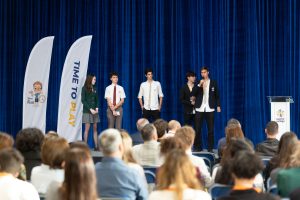
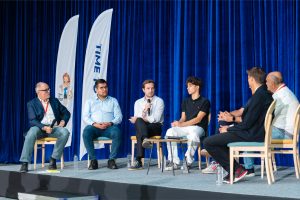
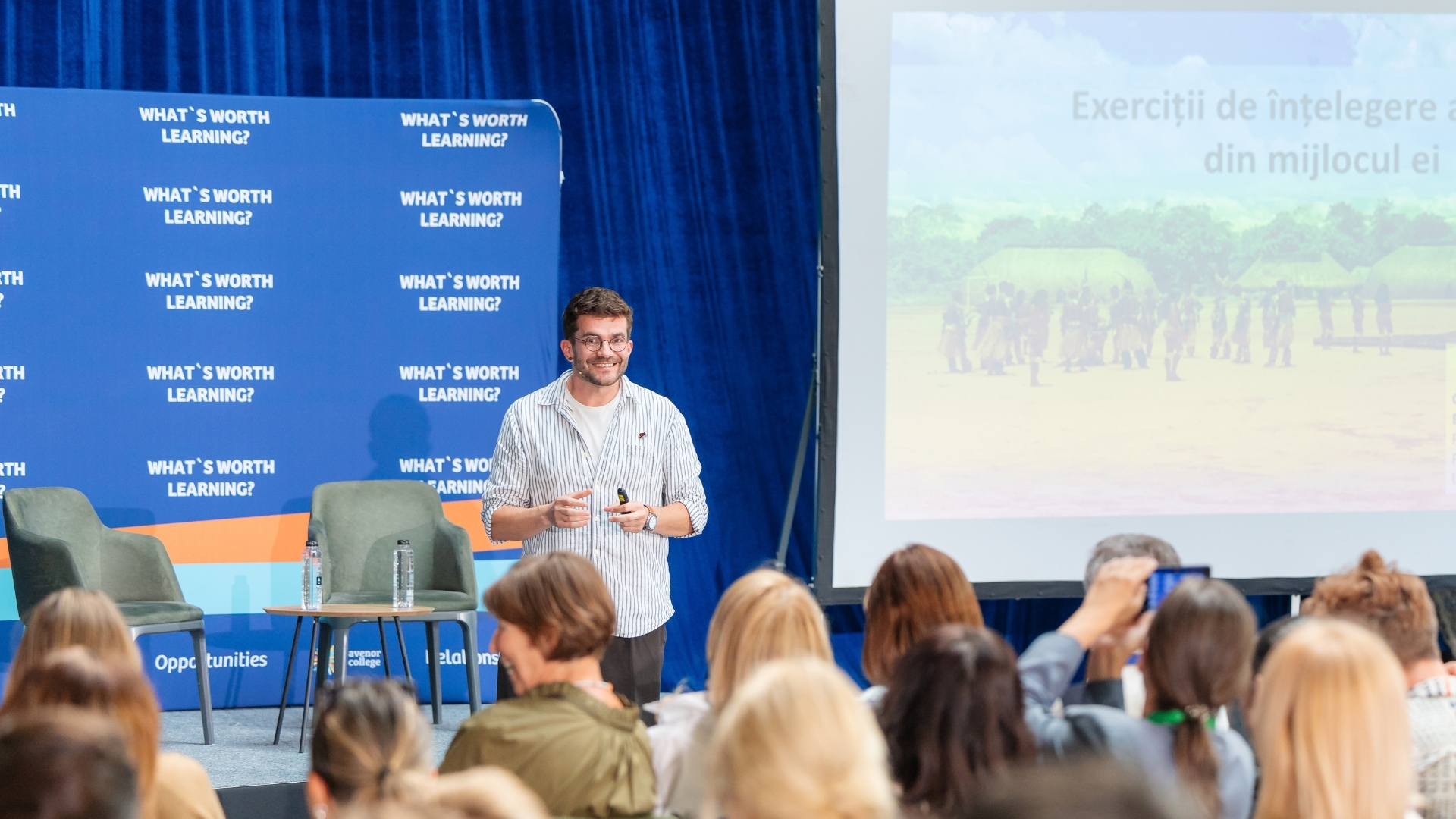
The pre-university education law identifies eight key competencies that schools should cultivate: the ability to read, write, and understand messages; multilingual skills; mathematics and science; digital, personal, and social competencies; the capacity to learn how to learn; civic and environmental competencies; entrepreneurial skills; and cultural and artistic skills. These were also highlighted recently by Minister Daniel David at the “What’s Worth Learning?” conference held at Avenor College.

If we look honestly at this list and ask how many of these competencies are actually reflected in exams focused solely on Romanian and Mathematics, the answer is uncomfortable. Of course, these subjects are fundamental, but they alone cannot represent the full developmental profile of an adolescent.

Furthermore, the current National Evaluation model has no equivalent in the European Union. Many education systems include end-of-cycle assessments that combine multiple subtests, or hybrid formats where written exams are complemented by projects, portfolios, oral assessments, and practical tasks. There is no universal formula, but the common principle is clear: a broad range of competencies should be assessed in authentic contexts, rather than merely testing the ability to solve a single type of exercise under strict time limits.

Seeing it from a parent’s perspective

For parents, the National Evaluation is far from theoretical. It takes the form of late-night studying, tense conversations about grades, and the fear that a fraction of a point could close a door. For many families, 8th grade becomes a narrow tunnel where everything revolves around the exam.

In this context, evaluating a broader spectrum of competencies, rather than relying solely on two tests, could make the assessment process fairer and more reflective of real learning. This does not mean an “easier” exam, but one that is more accurate and realistic. Children are not defined by a single exam. They are defined by how they think, ask questions, collaborate, handle mistakes, express curiosity, show creativity, and engage with the world.

When the evaluation system recognizes these dimensions, the message to children changes: you are not just a score; you are seen as a whole. For parents, it also changes the conversation at home, replacing “What grade did you get?” with “What did you learn?”, “What went well?”, and “What could you improve?”

8th grade at a school focused on the 3 Cs — Competencies, Conceptual Understanding, and Character: the Avenor example

At Avenor, the end of 8th grade highlights holistic learning across the middle school years, so that a student’s profile is seen in its entirety, not just through two written tests. By the end of middle school, students have already participated in international assessments in Mathematics, Science, and English, which test conceptual understanding and the ability to apply knowledge, not just memorised exercises.

In Romanian, students gradually build their identity as readers and communicators through extensive reading, memorizing poems, and delivering numerous oral presentations. Final assessments naturally include aspects that cannot be captured in written exams: clarity of thought, coherence of arguments, and the expression of their personal voice.

At 14–15 years old, the ability to speak in public and defend a point of view becomes as important as analysing a literary text. For many students, public speaking and presenting to peers and teachers becomes as memorable as an exam itself.

Learning extends beyond the classroom. Field trips, interdisciplinary projects, and extracurricular activities provide real contexts to apply knowledge. From nature excursions and museum visits to community-impact projects, every experience contributes to their growth. Participation in The Duke of Edinburgh’s International Award programme further develops responsibility, goal-setting, progress monitoring, and collaboration — essential aspects of character.

The curriculum is designed to integrate the three Cs — Conceptual Understanding, Competencies, and Character — naturally into everyday learning, not just formal assessments. Each student’s journey is documented through a portfolio of projects and reflections. This portfolio is not just a showcase; it is a tool for students to understand their growth: who they are becoming, what skills they have improved over two years, and how their thinking and working methods evolve.

End-of-middle-school evaluation considers three key points: where the student started, the level they have reached, and where they can realistically progress, based on effort and resources. It does not label students but provides a comprehensive view that supports conscious and informed steps toward high school. This approach does not eliminate the emotions of exams but shifts the perspective: from “I must get a grade” to “I am using my competencies to the fullest.” Ultimately, this is the essence of learning: progress, clarity, and confidence.

Balancing the desire for change with the need for predictability

At the national level, no one expects overnight changes. Behind every generation facing the National Evaluation are years of preparation and life plans, and instability would increase anxiety. At this stage, there is agreement with the Minister that major exams cannot be reorganised abruptly from one year to the next.

However, any new model must combine two principles: the courage to acknowledge the limitations of the current system and the responsibility to build a new one predictably and communicated in advance. This requires clear pilot programs with announced cohorts, sufficient time for adaptation, meaningful consultations with schools and teachers, and leveraging experiences where competency-based assessment is already practiced daily.

The long-term benefits of change

Reforming assessment is not cosmetic; it is a realignment of educational values. If exams measure competencies that matter for life, the benefits go far beyond high school admission.

We will have adolescents who understand their strengths, who are not defined solely by averages, and who have practiced thinking, arguing, creating, and collaborating throughout school. They will be accustomed to setting goals, tracking progress, and seeing a grade as a reference, not a verdict.

For parents, the real stake becomes perspective: not only the final grade, but the child’s full journey. How have they grown over four years of middle school? What curiosities have they discovered? How confident are they speaking in public? How do they respond to mistakes? A richer assessment system provides nuanced answers to these questions.

An invitation to dialogue

The discussion about the National Evaluation is ultimately about the kind of school we want. The transition will not be simple, but speaking openly about competencies, predictability, and alignment with European standards is already progress.

As parents, we can stay informed and engaged, ask questions, seek clarity, and support initiatives that put the child, not just the test, at the center. As a school, Avenor will continue to actively share what works.

Ultimately, the National Evaluation measures a moment, not a destiny. The three Cs — Concepts, Competencies, Character — show children the real path: how they think, how they act, and how they behave.

Mathematics Beyond Formulas: Learning Through Concepts and Inquiry

At Avenor, teachers are constantly exploring new ways to make learning meaningful and relevant. Recently, they participated in a workshop led by Patrick Renouf, an international expert in mathematics pedagogy, focused on Concept-Based Inquiry (CBI) – a method that changes the way students understand and apply mathematics.

The event, organized as part of the PACT for IMPACT – Applied Projects in Transdisciplinary Contexts initiative, funded through Romania’s National Recovery and Resilience Plan (PNRR), provided teachers with practical insights on how to transform mathematics teaching into an experience of discovery and deep thinking.

Teachers from Avenor and Gheorghe Vernescu School in Râmnicu Sărat, a project partner, took part in the workshop. More details on this teaching approach and its classroom benefits come from Ramona Mucenic, Acting Head of Primary School.


A New Philosophy in Teaching Mathematics

The focus of the workshop – “Teaching Mathematics through Concept-Based Inquiry (CBI)” – invited teachers to move beyond formulas and algorithms. CBI starts with thought-provoking questions and the exploration of “big ideas” to help students uncover the rules that govern mathematics, rather than just applying them mechanically.

Mathematics is not about speed, it’s about understanding,” emphasized Patrick Renouf, summarizing the essence of this approach. Rather than giving answers, teachers create discovery-based contexts, ask questions that stimulate thinking, and guide students’ investigations.

CBI turns mathematics into a story about ideas and connections. Instead of learning formulas, we learn how the world works through mathematics,” explains Ramona Mucenic, Acting Head of Primary School. “It’s a profound shift in perspective, because we teach children to think, not just to memorize.

From Algorithms to Meaning

CBI involves inductive learning – students observe patterns, formulate rules, and test them. This method brings learning closer to students through curiosity and relevance (lessons start from authentic questions connected to their world); autonomy (students investigate, form hypotheses, explain their reasoning); success for all (tasks with different difficulty levels allow every student to succeed and progress); and reflective feedback, not just grades, supporting intrinsic motivation.

Students feel they are learning something that matters and that they are truly heard and challenged to think. They become explorers of mathematical ideas, not just children solving exercises. They engage when learning is authentic, when they see relevance in their daily lives, and when they have the freedom to explore,” explains Ramona Mucenic.

During the workshop, teachers experienced this method firsthand: working with manipulatives, analyzing tasks with multiple levels of difficulty, and designing lessons based on conceptual questions. The goal: logical, relevant, and enjoyable mathematics where every student can succeed and progress.

Teachers’ Feedback: Inspiration and Rediscovery

For participating teachers, the experience was transformative. They appreciated Patrick Renouf’s energy and clarity, the practical and interactive nature of the sessions, and the examples of model lessons from real classrooms.

What inspired us most was the idea that mathematics is about thinking, not speed. That every child can excel in mathematics if we give them time and the right context to understand,” summarized Ramona Mucenic.

Aligning with Avenor’s Philosophy

For Avenor, this workshop aligns perfectly with the school’s educational philosophy of meaningful learning through connections and real-world applicability. The session with Patrick Renouf provided the methodological framework to turn this vision into practice: planning lessons around conceptual questions, inclusive tasks, and fostering a culture of reflective thinking.

It also supports the broader objectives of the PACT for IMPACT project – developing mathematical literacy, critical and creative thinking, and continuous teacher development.

Long-Term Impact: From Critical Thinking to Confidence

CBI does more than change how mathematics is taught; it reshapes students’ approach to learning in general.

When we teach children to seek meaning, ask questions, and explain their reasoning, we nurture a mindset that goes beyond mathematics. It becomes a life lesson in perseverance, curiosity, and self-confidence,” says Ramona Mucenic.

Over time, this approach helps students become critical thinkers, capable of applying knowledge in real-life contexts, embracing mistakes as learning opportunities, and seeing mathematics as a friend rather than a barrier.

We want our students not to fear the unknown, but to explore it. Mathematics is just one of the ways we teach them that,” adds Ramona.

***

The workshop “Teaching Mathematics through Concept-Based Inquiry” was organized as part of the PACT for IMPACT – Applied Projects in Transdisciplinary Contexts, funded through Romania’s National Recovery and Resilience Plan (PNRR).

The project seeks to fundamentally transform how mathematics is taught and learned at the primary level. It emphasizes the development of mathematical literacy alongside critical and creative thinking skills, while offering teachers ongoing professional development, mentorship, and co-teaching opportunities. Its transdisciplinary approach is designed to link mathematics to real-world contexts, making the subject more engaging and accessible for students. We also aim to create innovative educational models that can be replicated in any school across Romania.

What’s Worth Learning? – Dialogue with Prof. Daniel David, PhD, Minister of Education, at Avenor College

A good teacher is one whose students can answer three essential questions during class: What do I know? What can I do? And why is what I’ve learned important?

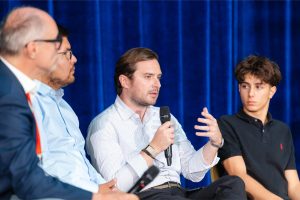
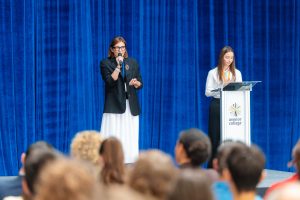
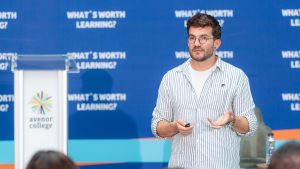
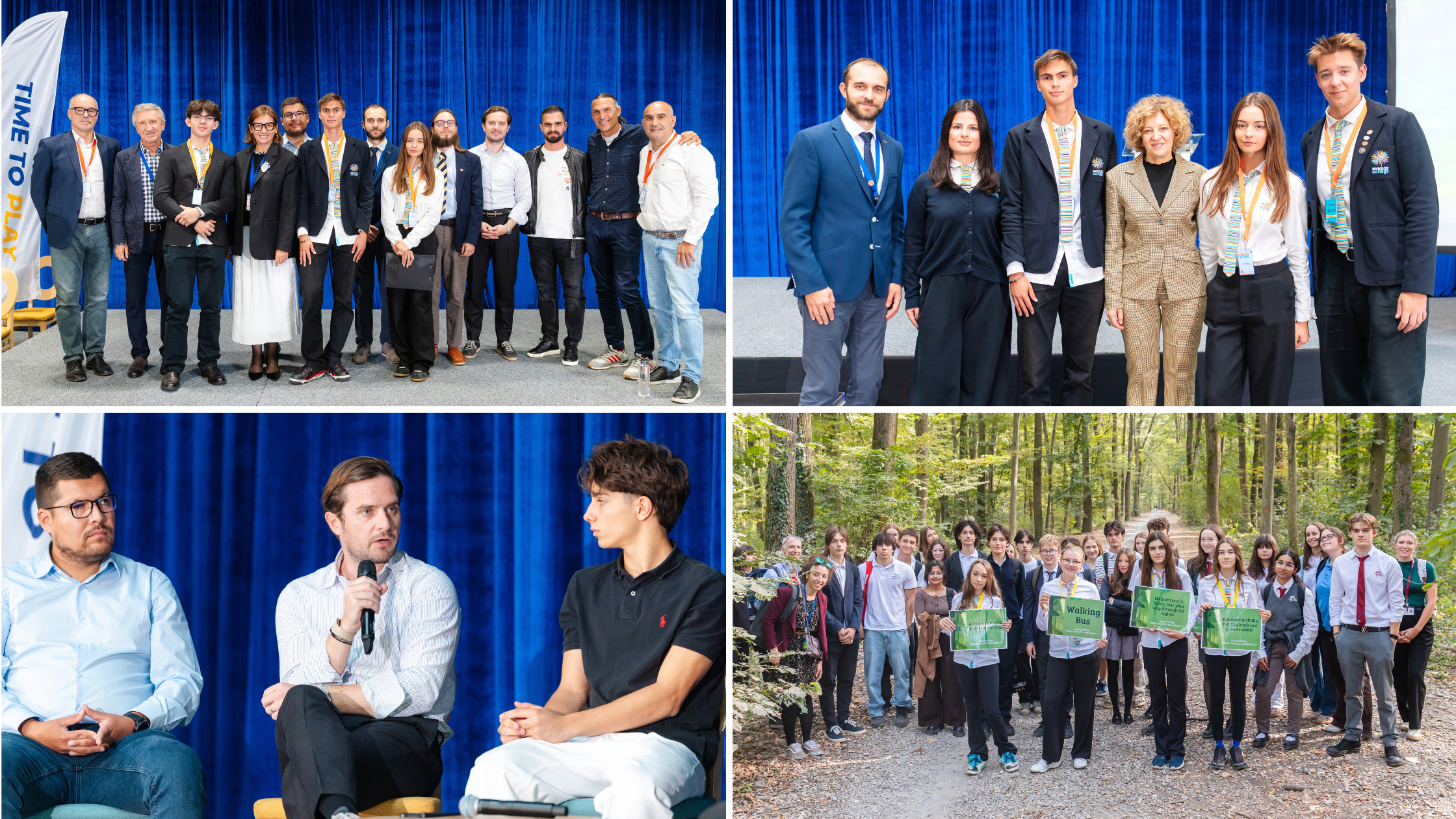
These were the words of Prof. Daniel David, PhD, Minister of Education, the special guest of the seventh edition of the “What’s Worth Learning?” conference, held on October 2, 2025, at Avenor College.

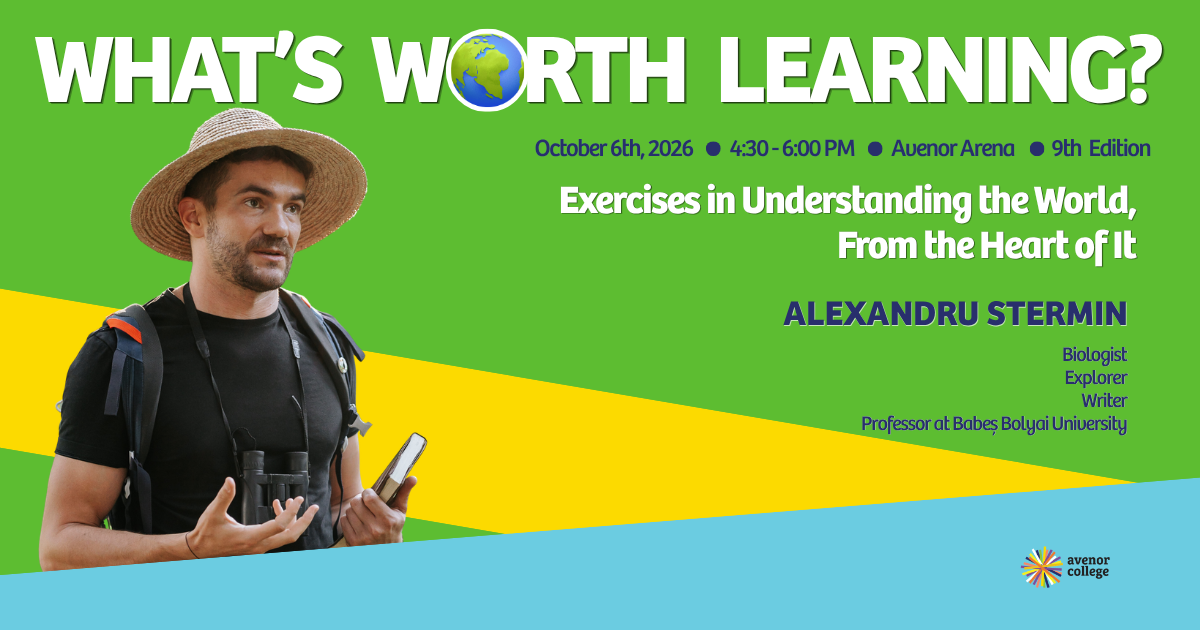
What’s Worth Learning?” is an educational and cultural initiative through which the school brings remarkable figures from academia and society to engage the community in dialogues meant to inspire reflection and change. The main guest of this first meeting of the school year, Prof. Daniel David, PhD, an internationally recognized cognitive psychology expert, discussed how education can remain relevant for the future and what competencies schools should cultivate.

Relevant Education for the Future

What does relevant education look like in a rapidly changing world? What skills help students become confident, adaptable, and prepared for future challenges?

At Avenor College, these questions lie at the heart of our dialogue about learning. Together—with students, teachers, parents, and special guests—we explore the answers. The “What’s Worth Learning?” conference provided an opportunity to exchange ideas on how schools can nurture not only knowledge but also essential life competencies.

Developing Skills for the Future

The conference theme, Developing Competencies in Education from the Perspective of Cognitive Sciences, emphasized that education is not just the accumulation of information, but the co-creation of skills and the ability to apply them in practice. The Minister highlighted eight key competencies: language and communication, multilingualism, STEM (Science, Technology, Engineering, Mathematics), digital skills, civic education, self-awareness and emotional intelligence, entrepreneurial mindset and cultural sensitivity.

We cannot know what the job market will look like in 10–15 years. But if students are prepared through these competencies, they will be able to adapt and build their future.

The Minister stressed that these competencies cannot be developed in isolation but require an integrated approach combining declarative knowledge (theory), procedural skills (practical abilities), and personal values.

A good teacher is one whose students can answer three essential questions during class: What do I know? What can I do? And why is what I’ve learned important?

Values-Based Education and Cooperation

Drawing from his book The Psychology of the Romanian People, Daniel David highlighted the importance of personal values and collective trust, explaining how low trust levels among people limit cooperation and the building of strong institutions:

Distrust among us prevents us from cooperating effectively. And because we do not cooperate well with one another, we have failed to build strong institutions in our psychocultural evolution as a civilization. Instead, we have lived in a collectivist logic, where interpersonal relationships prevailed over institutional rules… If each of us defined two or three core values, life would gain meaning and significance. It’s simple, it costs nothing, but it requires honesty and consistency.

A Conference That Inspires

Prof. Daniel David’s visit to Avenor College not only gave students, teachers, and parents the opportunity to engage with an expert in cognitive sciences but also reaffirmed our commitment to relevant, competency- and values-centered education that prepares young people for the challenges of the future.

Purpose and Intention – The Elements That Define Avenor’s Culture

At Avenor … purpose is visible in every corner, every decision, every relationship.

This is how Tracey Ezard, an Australian educational leadership expert, begins her reflection on her visit to Avenor College – an experience she describes as “a real lesson in intentionality and purpose in education.

Her article, Intentionality and Purpose in Bucharest, published following the Australian delegation’s visit to Bucharest, offers a valuable perspective on how Avenor’s culture is perceived by educational leaders from another part of the world. We invite you to read the full article.


A Meeting Between Two Educational Worlds

Avenor had the pleasure of welcoming a delegation of educational leaders from Australia, who spent three days in Bucharest on a study visit. The visit was part of a program exploring innovative educational practices in Central and Eastern Europe, and Avenor was one of the schools selected to illustrate how an international community can combine academic excellence, personal development, and contextualized learning.

The delegation, led by Anne Knock, PhD, Director: Strategy, Culture and Learning Environment Design at The Learning Future, included educational leaders from several Australian schools, all keen to observe education models that emphasize autonomy, collaboration, and innovation.

Meetings with Avenor’s educational leadership teams generated deep discussions about organizational culture, learning environments, and the role of leaders in shaping an inspiring community. It was an authentic dialogue between two educational worlds that, despite operating in different contexts, share the same values: collaboration, reflection, and continuous learning.

One of the moments that impressed the visitors the most was the meeting with high school students, who presented projects initiated and led by themselves: TEDx Youth@Avenor, the 24h Business Challenge, the Avenor Christmas Charity Fair, and the partnership with Tășuleasa Social—all examples of learning through engagement, collaboration, and leadership.

For the Australian guests, these initiatives were concrete proof that entrepreneurial spirit, social responsibility, and experiential learning can be nurtured from the early years of schooling.

Avenor – A School with Purpose

For our team, this visit confirmed that the direction in which we are developing aligns with international best practices – an education with purpose, built on authentic relationships and real learning experiences.

The same impression is shared by Tracey Ezard, who describes Avenor as a school “where every decision reflects a clear and deliberate purpose, and the organizational culture is infused with lived values, not just declared ones.” She highlights “the energy of the environment, the kindness of the people, and the power of purpose” as defining traits of our community.

Her reflection captures the essence of a community that grew from a bold vision – the creation of a school that encourages autonomy, curiosity, and initiative, giving every student the space to discover themselves and learn through action.

We are honored by this perspective from an educational expert with extensive international experience, and we are delighted that we have succeeded in offering a faithful representation of how, through intention and collaboration, we build meaningful learning every day for our entire school community.

Teachers Who Learn: What Professional Development Looks Like at Avenor

At Avenor, learning is a continuous process, done with intention and seen as a priority not only for students but also for teachers. We believe that a teacher who keeps growing, exploring, and reflecting inspires their students to do the same. The excellence we strive for in the classroom starts, therefore, with the excellence in the training of those who stand before our students every day.

So what does professional development look like when it goes beyond formalities and paperwork to become a real opportunity for growth?

Cristina Bumboiu, Curriculum Development and Teacher Training Lead at Avenor, shares the learning priorities for this school year and how professional development directly impacts classroom practice.


A Different Kind of Professional Development

Inspired by Andy Hargreaves’ idea – “What we want for our students we should want for our teachers: learning, challenge, support and respect” – the Avenor team has designed a Professional Learning Development (PLD) programme that places teachers at the centre of their own learning journey. It is not formal or bureaucratic, but alive, dynamic, and built to meet the real and diverse needs of our colleagues.

Personalised and Practical Learning

A key novelty at the start of the year was the “PLD Fair”, organised to give colleagues the chance to learn more about the training opportunities available this year directly from the trainers themselves. Each teacher could then freely choose the path of development that suited them best.

In an open dialogue, trainers presented the courses they would deliver throughout the school year and answered colleagues’ questions. This created the framework for a personalised and relevant learning journey.

This year’s training offer includes seven courses designed and delivered by our colleagues, structured as modular learning units for teachers. Topics range from designing impactful modules and applying the “3Cs” model, to using AI in planning, reflection as a tool for transformation, innovative approaches to teaching mathematics, and creating deeper learning experiences.

What’s New This Year

The focus this year is on concept-based learning and exploring modern methods that help teachers design lessons that are deeper and more impactful.

Artificial intelligence is explored as a planning tool, reflection is seen as an essential part of the learning process, and the pedagogy of 90-minute lessons is examined in depth. All these directions give teachers opportunities to diversify their skills and discover new ways to engage students.

At the heart of the programme are the mentors – Avenor teachers whose role is to support colleagues in identifying their greatest areas for growth and turning them into development opportunities. All of this unfolds under the umbrella of the “3Cs” – Conceptual Learning, Competency-Based Learning, and Character Development – the core pillars of Avenor’s educational model.

The Impact on Students

All PLD courses this year have a strong practical component: what is learned in training is applied immediately in the classroom, followed by reflection and adaptation. This, we believe, is the most valuable aspect of Avenor’s professional development programme.

A teacher who never stops learning shows their students, through personal example, that growth is a lifelong journey. In the classroom, this translates into learning units that go beyond the transmission of information and instead help students think critically, reflect on their learning process, collaborate, and use information resources responsibly.

In this way, students become better prepared for a world that is constantly changing. We want them not only to know what to do, but also why it matters and how to adapt when circumstances shift. Ultimately, only under the guidance of well-prepared teachers can our students grow into balanced, responsible adults, ready to face the challenges of the future.

How We Build Robots and Skills: Transdisciplinary Learning in STEAM

The STEAM programne is an innovative educational initiative that focuses on transdisciplinary learning, combining the subjects of Design & Technology, ICT, Arts, and Drama to develop students’ essential skills. 

This year marks the program’s second edition, continuing to challenge and inspire students to explore and create beyond the boundaries of traditional disciplines. Smaranda Nicolau, Teacher of Drama and Media Studies, joyfully shares the experience of the fifth-grade students in the STEAM programme—a journey full of creativity, discovery, and collaboration. 

In the article, you will discover how these young innovators transformed ideas into concrete projects, enthusiastically and boldly exploring the fascinating world of design, technology, and art.


Last week saw us wrap up the STEAM program for Grade 5. The program, titled How To Build Another Me, has now run for a second consecutive year. This year, we had the pleasure of inviting parents to observe the outcomes of learning. And observe they did, as almost 60 Grade 5 students huddled together on the terrace of our Secondary building to present what they had worked on in the four subjects that come together to form this transdisciplinary program: Design & Technology , ICT, Arts and Drama.

The Robot and the Story: Improvisation and Creation

For 10 minutes, in their teams of three, students performed short improvised scenes that they had rehearsed in Drama. In these scenes, students had created simple, real-life scenarios exploring a situation in which three people, having a regular day, come across an extraordinary object – a ROBOT.

Each team created their own situation, their own characters and each team came up with a different problem that the robot helps solve (or creates). Students built these scenes from the ground up in Drama classes and developed them independently, through improvisation. 

We very much wanted parents to have access to this imperfect but amazing work-in-progress that showcases their creativity as well as their performance skills. Some scenes were truly remarkable, some were simple and effective, but all students performed and all work was entirely their own. 

From Self-Portrait to 3D Character

The same can be said for the amazing displays teams created to showcase their progress through Arts, where they learned how to create character designs starting from self-portraits and then advancing all the way to printable 3D figures and even Funko-Pop style characters based on themselves. Just like in Drama, learners’ starting point was their own experience. The artistic subjects in STEAM have this opportunity to encourage learners to explore starting not from afar, but from up-close, from what they know best and yet seldom stop to learn more about at this age – themselves. 

When Imagination Meets Technology

The process then moves into its technical side with students developing coding and design skills in ICT and Design & Technology. Whereas the arts allow freedom of expression and promote exploration, ICT and Design & technology anchor this exploration in real-world possibilities. Yes, it is possible to make a machine behave in any conceivable way, but in order to do that, you have to be able to break down the behaviour into small, logical and connected steps (ICT). Yes, it is possible to design anything, but in the end you must understand the limitations of the technology used to make your product – 3D printers can only print a specific format and your design needs to adapt to that format. Yes, the robot could have arms like an octopus, but they’ll probably fall over and not be able to move them. 

Yes, the real world imposes limitations. These are not the enemy of creativity, but ultimately its greatest helper in becoming useful to others. In our minds, we can come up with any story and any design, but in the end, we will perform only the stories that make sense to an audience and create only designs that work and can be helpful to other human beings. 

Input – Process – Output: A Transdisciplinary Lesson

It was this insight that we tried to convey through our STEAM Module in Grade 5. We wanted learners not only to gain conceptual understanding and competencies in each of our subjects (What is Binary Code?, What is Character Design?, How does 3D printing work?, What is a character’s backstory?) – we wanted them to be able to transfer these concepts and use them across disciplinary boundaries. While all of the subject matter being covered in STEAM is still the content of the National Curriculum, teaching these subjects together over the past two years is our way of making learning more relevant and more life-like and connected. But it is also our own way of creating a story of learning, because, as teachers, we know that what links learning together best is a good yarn. 

The Robot — A Little Box, A Universe of Ideas

The story of STEAM is the story of any process – it begins with an INPUT. In Drama, the input for an improvisation is usually the audience’s suggestion of a space for the scene to take place in, or a relationship between the characters. In ICT, the input for machine behaviour is usually a code which prompts actions. These two types of inputs, when looked at closely, are very similar. Human beings also receive code inputs that prompt action. 

The story then continues with a PROCESS by which the input is integrated. 

Here again, the Arts share some part of the process – in Drama and Visual Arts, the process is the slow and gradual acquisition of skill that will allow our hands, voices and bodies to bring the contents of our imagination onto a piece of paper or a stage. It takes practice and it is a process of failing and trying again. 

In Design and in ICT, the process shares different elements – elements of learning about machine capabilities, of learning how to translate what is in our mind into language that a 3D printer can read or into code that a small robot can perform. 

Finally, the story ends with an OUTPUT. This is what we invited parents and teachers to observe. In our case, the output was a presentation of the students’ work in our subjects over the course of a year. The product – a small robot that reacts to the person in front of it by moving its arms, body and emoting with an LCD screen and a speaker. Kids usually design amazing 3D printed parts so the robots are quite a bit of fun, for both the students and their parents.

At the end of the day, though, the robot is only a small box with moving parts. On its own, it wouldn’t look like much. This is one reason why we love it even more – though small, it embodies a big truth about learning. What is visible of learning is often very little. The real learning, the massively interconnected and truly impressive structures of knowledge that get built – we cannot see those, because they are hidden away in another small box, the one that really matters in this case – a young learner’s brain. With its own myriad of inputs, unique and mysterious processes, and the lovely creative outputs it brings into the world, for teachers and parents to see on a Wednesday morning on the terrace in front of the Senior Cafeteria.

Thanks to the kids for taking up our challenge, to everyone who attended and of course, to the dream team of teachers who made it all happen (in alphabetical order): Victor Bratu (ICT), Salih Gokcel (Design), Bogdan Topîrceanu (Arts), Vlad Oancea (Drama).

The “Teachers for Teachers” Programme – or how to become a career teacher

For young graduates embarking on a career in education and for early-career teachers, the first steps can feel daunting. Too often, the training they receive does not fully prepare them for the realities of the classroom, leaving them to face complex situations without clear guidance, benchmarks, or ongoing support.

That is exactly why, at Avenor, we created “Teachers for Teachers” – a training and mentorship programme dedicated to those who want to turn teaching into a true profession. Starting this autumn, the programme enters its third year of successful implementation.

APPLY NOW TO THE TEACHERS FOR TEACHERS PROGRAMME

We are looking for subject specialists in middle and high school, as well as primary school teachers, to join us for the upcoming academic year – motivated individuals looking for a professional environment where they can grow and become strong education professionals.

Find more information about the recruitment process HERE.


What is the “Teachers for Teachers” programme?

A two-year, paid professional training and mentorship programme dedicated to early-career teachers – whether they are graduates of pedagogical high schools, final-year university students, or degree holders who have completed the teacher training module.

The programme provides hands-on classroom support, ongoing mentoring, continuous training, and a practical perspective on teaching in an international and collaborative environment.

At Avenor, quality education is a shared mission, and teacher development is seen as a process that requires support, collaboration, and guidance. From this belief, a safe and generous learning space was born – one in which early-career teachers can learn, experiment, make mistakes, and grow.

What makes this programme special?

More than just a teaching placement, “Teachers for Teachers” offers a full experience within a private international school, with high standards and a team of over 100 Romanian and international teachers with experience in various educational systems.

Participants have the opportunity to work directly with these teachers, observe lessons, co-teach alongside Avenor mentors, and benefit from constant, personalised, and development-focused feedback.

The Teachers for Teachers programme was a major turning point in my teaching career. Through it, I developed professionally, refined my teaching methods, and improved how I connect with students. I teach Physics following the British curriculum, and through this mentoring programme, I discovered and adopted innovative strategies for explaining complex concepts and making lessons more engaging and interactive.

What I appreciated most about the programme was the collaborative atmosphere, access to diverse resources, and the constant support from experienced teachers. This continuous guidance helped me gain confidence and become more competent – something that clearly reflected in my students’ learning experiences and results.”— Andrei Vasiliu, Teacher of Physics, participant in the Teachers for Teachers programme.

What do participants actually learn?

  • How to plan successful lessons tailored to students’ levels
  • How to manage a diverse classroom and build authentic relationships with students
  • How to create effective and engaging learning resources
  • How to work as part of a team in a complex educational ecosystem
  • How to turn day-to-day challenges into learning opportunities

“Over the two years, Teachers for Teachers was a valuable professional learning experience for me, full of important lessons and challenges.

In the first year, I had the chance to attend lessons in various subjects, which helped me understand different teaching styles. It was a much-needed experience for a beginning teacher, but also a challenge – having to quickly adapt to each approach. Towards the end of the school year, I began co-teaching with history teachers, which gave me my first real experiences in both teaching and teamwork.

In the second year, I took full responsibility for my own history classes, which allowed me to focus more on the students and shape my own teaching style. Even though I no longer attended as many of my colleagues’ lessons, I continued to benefit from their support and guidance.

If I were to summarise this period, I would say I gained more confidence in my own methods and became truly responsible for my students’ progress.” — Oana Otveș, Teacher of History, participant in the Teachers for Teachers programme.

What sets us apart?

In many schools, beginning teachers are left to manage on their own from the very first day. At Avenor, we believe that strong educators are developed collaboratively, within supportive communities of practice.

The programme follows the format and standards of early-career teacher training programmes from the UK and includes:

  • Experience in an international school – continuous in-class training
  • Team teaching alongside an experienced teacher
  • Development of skills for designing educational resources and lesson plans
  • Lesson observation and ongoing feedback from mentors
  • Possibility to continue working at the school after the programme ends

At the end of the two years, participants can apply for an internationally recognised certification in the UK, opening the door to a global career in education.

“I feel that I’ve gradually earned my students’ respect – and the fact that many of them enjoy coming to Geography class is, for me, one of the greatest joys. From time to time, I even get messages from parents telling me how much their children love my lessons.

I’ve started to feel that my lessons are becoming more dynamic and interesting – for the students, and for me too 🙂 …

Essentially, my message is one of gratitude – for all the support offered to young, inexperienced teachers. Too often, job adverts state that ‘experience is required’ – but how can someone gain experience if no one offers them a chance?

The beginning of a career comes with challenges that few can see. Even though it’s a beautiful time in life, it’s also when you can feel thrown into the deep end without much support or preparation.

I consider myself incredibly lucky that I didn’t have to go through all of this alone.”— Cosmina Costache, Teacher of Geography, participant in the Teachers for Teachers programme.

Who is the programme for?

We are looking for:

  • Primary school teachers who are dedicated and eager to learn
  • Middle and high school teachers in Mathematics, Economics, Computer Science, English and other subjects
  • Graduates or students who have completed the teacher training module (Level 1)

More details about the programme and how to apply can be found HERE.

Where does the programme take place?

The programme takes place at the Avenor College campus in Bucharest – a modern space, equipped with top facilities that encourage collaboration, creativity, and professional development. It is a challenging yet supportive environment for building a solid teaching career.

***

Avenor College is a non-profit educational institution, a bilingual international school rooted in Romanian culture.

Avenor College holds dual accreditation, both in the Romanian system (ARACIP) and in the British system, as a British School Overseas (BSO), representing the UK Department for Education (DfE).

We co-create stimulating learning experiences for each of our students, aged 2 to 18, helping them develop the skills they need for the future. Our vision is to become a positive and innovative educational benchmark in Romania.

Avenor’s mission is to shape the leaders of the future, by challenging students to discover their strengths and talents, to design their own learning pathways, and to shape their own futures.

The Nursery Playground – More Than Just a Place to Play

In early childhood education, the environment plays a vital role in shaping a child’s fundamental skills. From autonomy and self-confidence to social, motor and cognitive abilities – all can be naturally nurtured through direct, authentic outdoor experiences.

At Avenor Nursery, the outdoor space is designed as an integrated learning environment, where every element is intentionally planned to support the child’s developmental stages.

We learn more about how outdoor space can serve as an educational resource that supports the physical, emotional, and social development of preschool children from Cristina Farcaș – Deputy Head of Nursery (Cașin).


In recent years, most children have been born and raised in highly controlled environments – often, unfortunately, overly protective ones: overly cautious parents or grandparents, “100% safe” materials and structures, countless indoor play spaces, fewer and fewer opportunities for trial–error–new attempt cycles, and excessive exposure to static activities deemed “safer”, such as screens, television, or worksheets.

The effects of these environments are already visibly present: an increase in various fears or, conversely, a reduced ability to anticipate danger and understand spatial dimensions, hesitation in decision-making, frustration, and clumsiness in social interactions – not to mention the consequences of a sedentary lifestyle.

At Avenor Nursery, nature is a core value that defines us. It is part of the solution offered by our educational philosophy to families who entrust us with their children. Our curriculum is intentionally and structurally built to include outdoor pedagogy: specific topics, field trips, time for outdoor learning, real-life experiences, and more.

Children have direct daily contact with nature for at least one hour in the outdoor space attached to each nursery site. Our playground is not just a space for recreation – it is thoughtfully designed as an open-air classroom where free play, including play that involves a small degree of risk, supports physical, cognitive, emotional, and social development.

The role-play structure, with its slide, climbing panels, and sensory zones for maths and music, is a magnet for storytelling. Here, two children might become jungle explorers while others bang sticks on a vibrating panel. This kind of play helps develop gross motor skills, logical thinking, empathy, and collaboration. Adults supervise the younger children attentively, but always tactfully and non-intrusively, leaving room for freedom of expression and creativity.

The balance and adventure trail gives little ones the chance to overcome fears and build muscle strength. It is a space where they encourage one another – “You can do it!” – and help each other back up when they fall. These are key moments for developing self-confidence and resilience. Even the youngest children, under three, with close supervision from educators, enjoy small but meaningful achievements.

One of the most loved features is the zip line, used independently by the older children and with individual adult supervision by the younger ones. Beyond the ever-present laughter, it becomes a complex exercise in coordination, balance, and courage. Children decide for themselves when they are ready to go, while others cheer them on or applaud them at the end. It is a moment of personal autonomy, risk-taking, and peer support.

In the Mud Kitchen or Arts & Messy Play area, play becomes an explosion of creativity. Children cook up “mud soups” for their friends or paint directly onto paper, their hands, or even stones. These moments foster free expression, fine motor skills, and a healthy relationship with mistakes – because here, there’s no such thing as “too much mess”, only new discoveries.

The barefoot sensory path offers children a full tactile experience – from smooth stones to tree bark or sand. It’s an excellent exercise for body awareness, emotional regulation, and inner calm. Children often delight in comparing the sensations: “This one’s prickly!” “This one’s soft like a cloud!”

In the Little House role-play area, children negotiate roles – “Who’s the family? Who’s visiting?” – and develop vocabulary, social rules, and empathy. Meanwhile, bikes and ride-on toys provide constant movement and independence – “Shall we park here?” “Let’s go to the petrol station!” In doing so, they strengthen their gross motor skills, learn about space and speed, and practise respecting shared rules.

We are proud of how we have managed to meet most of the developmental needs of children aged 2 to 6 through all the elements integrated into our nursery’s outdoor space. In doing so, we not only nurture age-appropriate core skills but also offer challenges to those who can and want to go further. In line with the latest trends in outdoor education, we are ready to meet the specific needs and neurodiversity of the new generations of children.

The National Evaluation – a Symptom of a Systemic Problem. And an Opportunity for Change

In recent weeks, the Minister of Education, Daniel David, has brought to public attention one of the clearest and most honest perspectives on Romania’s current evaluation system. He stated:

It is not fair that the Grade 8 evaluation covers only two subjects and that, based on those two subjects alone, your life path, your secondary school trajectory, is decided.

This observation opens up an important and urgent conversation about how we assess students — and how accurately these assessments reflect their real learning journey.

Diana Segărceanu, founder of Avenor College and an educational leader with nearly two decades of experience, explains in the article below how a system that truly places the child at its centre works in practice. A system that views assessment as part of the learning process — not as the final destination — and that supports teenagers to grow at their own pace, with confidence and clarity.

For me, this statement was more than welcome. It was a sign that, at last, education in Romania is led by a voice that researches, listens, understands — and has the courage to speak the truth. An academic voice, but a deeply human one.

I believe Daniel David is the best Minister of Education we have had so far — because he sees the system as a whole, while never losing sight of its impact on each individual child.

Why Doesn’t the National Evaluation Work?

As someone who has led a school for nearly 20 years, I can say the National Evaluation has two major flaws:

🔹 It is superficial

It assesses only two subjects — Romanian and Mathematics — entirely overlooking the other essential competencies a child should develop by the end of lower secondary education. It fails to reflect the reality of learning or a child’s true potential.

🔹 It is a source of stress and trauma

Because this single exam determines access to high school, it places enormous pressure on 14-year-olds and their families. It becomes a moment of collective anxiety, with long-term effects on self-esteem and motivation to learn.

The Minister described this phenomenon perfectly:

Your life depends on the National Evaluation, and so parents adapt to a distorted educational system.

The Solutions Exist. And They Work.

At Avenor College, we sought an alternative — because we have witnessed first-hand, alongside our students and their families, the effects of this system. And because we know another way is possible.

Our students sit the IGCSE (International General Certificate of Secondary Education) exams at the end of compulsory schooling (at age 16). This is a well-structured international model that assesses students in at least eight subjects — including two vocational subjects of their own choice.

It is a rigorous yet balanced form of assessment. It offers a clear picture of what a child knows and can do — at a more developmentally appropriate age. It does not reduce a student to a single mark. It does not define them by two subjects. And — most importantly — it does not cause trauma.

The IGCSE fosters general knowledge, critical thinking, and independence. It challenges students to take ownership of their learning journey, rather than studying simply “for the exam”.

We Need Meaningful Reform — Not Just Fine-Tuning

The truth is, we cannot build a relevant education system without first taking an honest look at what is not working. And the National Evaluation, in its current form, is just the tip of the iceberg.

National assessments are not sufficiently informative. You cannot promote eight key competencies and assess only two,” says Daniel David.

It is time to recognise that the problem is systemic — and that our children’s future cannot wait.

If we want a fairer, deeper, and more humane education system, we must have the courage to make real changes — not just adjustments. We need to learn from the models that already work and, together, build a genuine alternative for all students in Romania.

Gardening – A Practical Method for Learning Mathematical Concepts

In primary school, learning becomes truly valuable when children understand the meaning behind what they do. When mathematics steps out of the exercise book and into nature—when children measure plants with rulers and divide seedlings into trays—everything begins to make sense. The garden created by the Grade 2 and Grade 3 students provided an authentic learning context where mathematical concepts could be practised, applied, and understood in a concrete and relevant way, firmly anchored in real life. In this way, concepts that might otherwise seem abstract gained meaning and practical utility through direct experience.

This activity is part of the PACT for IMPACT project, through which our school—selected under the “Grants for Pilot Education Units” call funded by Romania’s Recovery and Resilience Plan (PNRR)—aims to bring about a real transformation in how Mathematics is taught in Primary School.

Andreea Dumitrescu, primary school teacher and educational gardening expert within the PACT for IMPACT project, shares how this educational garden took shape and how learning was brought into the schoolyard.

Context

Learning shouldn’t be limited to desks and textbooks. Early exposure to nature and hands-on activities like gardening revives the most intuitive learning environment—one where direct exploration and sensory interaction nurture curiosity, understanding, and respect for the living world.

We launched this project in March with Grade 2 and Grade 3 pupils to explore how practical gardening activities could be meaningfully integrated into the Mathematics curriculum, transforming often abstract concepts into concrete, engaging experiences. This approach brought Mathematics closer to pupils in a playful and interactive way, and proved to be a real success among the children.

Why Gardening and Mathematics?

Beyond developing basic skills, gardening cultivates responsibility, care for the environment, an understanding of plant life, and observation and investigation abilities. Perhaps most importantly, gardening made Mathematics relevant and enjoyable. Through working with soil, seeds, and plants, pupils were able to directly see and apply what they were learning in class.

The gardening activities were intentionally designed to cover a wide range of mathematical skills, tailored to the learning level of Grade 2 and Grade 3 students. Pupils measured plant heights and leaf sizes using rulers, recorded this data weekly in calendars or tables, and tracked plant growth over time. This simple task reinforced both measurement skills and the ability to collect and organise data.

Gardening also provided many contexts for practising basic operations. Planting seeds in trays involved using multiplication to calculate the total number of plants in a tray or in a given number of cells. Some challenges required division, such as figuring out how many pots were needed to plant a certain number of seedlings evenly, or dividing different types of flowers equally into recycled tyres used as planters.

A practical budgeting activity asked students to calculate how many seedlings could be purchased with a set amount of money, based on price per tray, or to suggest material purchases for expanding the school garden within a fixed budget.

Fractions became tangible when pupils divided planting areas into equal parts and drew plants to represent simple fractions such as ½, ¼, ¾, ⅜, ⅖, and ⅓. This hands-on, visual approach greatly supported their understanding of fractions and proportions. The garden also served as an excellent context for exploring geometric shapes.

The project showed that integrating gardening into Mathematics is not only possible but highly beneficial. Pupils were actively engaged, curious, and eager to learn. By measuring plant growth, calculating required resources, or planning garden layouts, mathematical concepts gained direct meaning and relevance. Problem-solving skills were nurtured through real-life gardening scenarios, while peer discussions supported mathematical communication.

In conclusion, educational gardening proved to be an innovative and effective method for teaching and learning Mathematics in Grade 2 and Grade 3. The combination of hands-on outdoor activities and applied mathematical thinking created a stimulating learning environment that contributed to pupils’ overall development on multiple levels.

What’s more, the entire school community—from the youngest to the oldest—now enjoys the beauty of the garden, which has become a daily source of inspiration and joy for all.