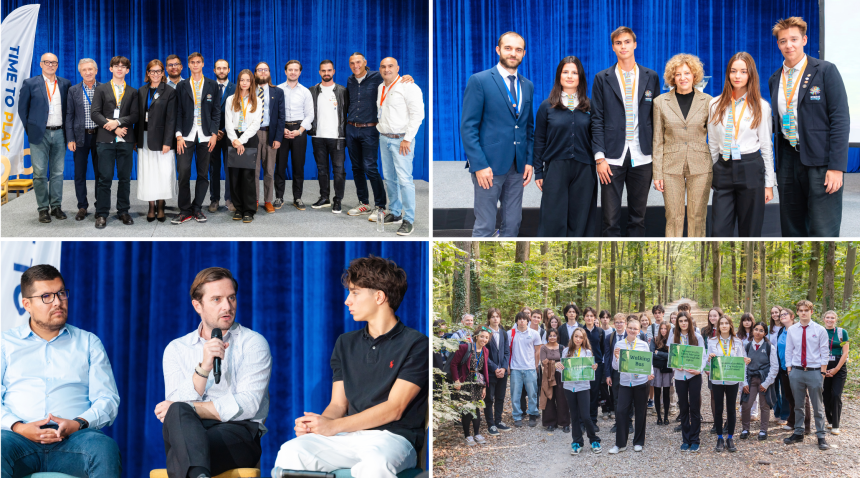
What would a city look like if children could get to school safely on foot or by bike, without relying on their parents’ cars? And what happens when students do more than talk about a problem – when they research it, propose solutions and present them to those who can help make change happen?
These questions were at the heart of the third edition of Urban Future: School Mobility Conference #3, an initiative by Time to Play, hosted this year by Avenor College and organised with the active involvement of Avenor high school students and the support of their teachers.
At the conference, students from nine schools in northern Bucharest addressed an issue that affects their daily lives: the lack of safe, connected routes for walking and cycling to school. In front of public authorities and mobility experts, they presented data, shared their experiences and discussed possible solutions.
For them, school mobility is more than a topic for debate. It is the journey they make every morning.
A Problem Students Know Firsthand and Have Researched
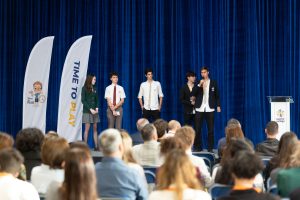
In the months leading up to the conference, students from the nine partner schools explored how children travel to school, how safe their routes are and what alternatives exist to travelling by car. They examined access to schools, cycling infrastructure and pedestrian routes, as well as the impact of time spent in traffic on students’ daily routines, independence and wellbeing.
The data collected showed that, if safe and connected routes to school were available, 35% of respondents would give up travelling by car in favour of cycling, while a further 30% would consider this alternative.
“Through this study, we wanted to understand how the time we spend travelling to school every day affects us. Responses from students and parents show that spending long periods in traffic causes frustration and leaves less time for activities outside school,” explained Dimitrie Iordan, a Year 12 student at Avenor College and coordinator of Urban Future: School Mobility Conference #3.
For the students, the research was the first step. The next was to present their findings and engage in dialogue with those who can help bring about change.
From Research to Dialogue with Public Authorities
Among the conference guests were Oana Gheorghiu, Deputy Prime Minister of Romania; Stelian Bujduveanu, Deputy Mayor General of Bucharest; Mair Amza, Public Administrator of District 2 City Hall; Șerban Țigănaș, Dean of the Faculty of Architecture and Urban Planning in Cluj-Napoca; Daniel Sărdan, a cycling specialist; and Gabriel Bănică, founder of Time to Play.
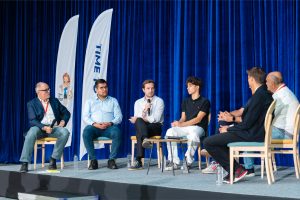
The meeting gave students the opportunity to present their proposals directly to those who can help put them into practice. The discussions went beyond presentations, highlighting the steps through which a community’s needs can be turned into concrete proposals addressed to local authorities.
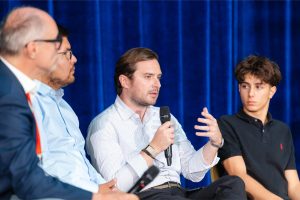
Stelian Bujduveanu encouraged students to join forces and submit a collective request, inviting them to City Hall to discuss their proposals with specialists.
“Community needs become visible through debates like this one. When 10,000 children call for cycle lanes in a particular area through a petition, the authorities cannot ignore that request,” said Bucharest’s Deputy Mayor General, highlighting the role of community involvement in setting the administration’s priorities.
The message was an important one for the students: the data they have gathered and the solutions they propose can become the starting point for a dialogue that continues long after the conference has ended.
“You Are NOT the Future. You Are the Present.”
One of the most powerful messages of the conference came from Deputy Prime Minister Oana Gheorghiu, who encouraged students not to automatically accept “It can’t be done” as an answer, but to keep asking what would need to happen for things to change.
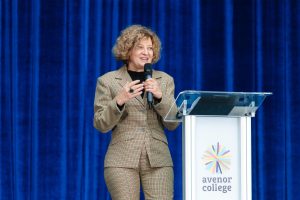
“Never stop asking why something cannot be changed when you are told, ‘It can’t be done.’ Why can’t it be done? And what can we do to make it possible?” she told them.
In the context of the issues raised by the students, her message took on a tangible meaning. Change can begin when people recognise what is not working, ask questions and work together to find solutions.
“Don’t stop, and don’t get used to things that aren’t right. Keep going, even when it feels like it’s all in vain. It is never in vain. Every small step will pave the way for the bigger one that follows,” Oana Gheorghiu urged the students as she concluded her remarks.
For the students involved in the project, taking part in the conference also meant understanding that their voices matter now, not only when they become adults.
Learning Beyond the Classroom
At Avenor, being involved in Urban Future: School Mobility Conference meant more than simply taking part in an event. High school students helped organise the conference, collaborated with partners and contributed to creating a space for dialogue between schools, experts and public authorities.
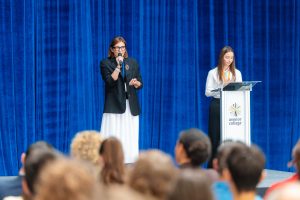
“The role of a school is to give students real opportunities to get involved, propose solutions and see that they can contribute to change. Through this meeting, we wanted, as adults, to set an example of collaboration and civic dialogue. These children are Romania’s present, as Ms Gheorghiu said, and their voices need to be heard now,” said Diana Segărceanu, Founder and Executive Director of Avenor College.
This experience reflects an approach to education in which learning goes beyond acquiring knowledge. Students start with a real-world problem, conduct research, analyse data, work together, make a case for their ideas and learn to engage in dialogue with people who have different perspectives and responsibilities.
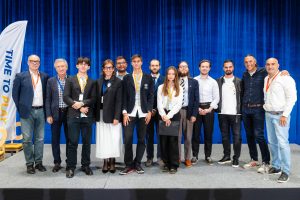
Through this process, they develop not only their ability to find solutions, but also the confidence to ask questions, stand up for their views and take an active role in their community.
Before Discussing Mobility, Students Experienced It Firsthand
On the day of the conference, the journey to Avenor College began with a walking bus through Băneasa Forest. Students from the partner schools walked the route together, experiencing an alternative to the usual car journey.
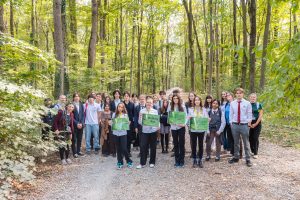
On arrival, they marked on a map how they usually travel to school: by car, public transport, on foot or by bike. Their individual experiences came together to create a shared picture of school mobility in northern Bucharest.
It was a practical introduction to the conference theme and a reminder that creating a city that is more child-friendly starts with understanding how children travel today and what would help give them more options.
Change Begins with the Right Questions
Urban Future: School Mobility Conference #3 brought together nine schools, students, experts and public authorities around a shared challenge. But beyond the presentations and discussions, the project showed what can happen when students are given the opportunity to research an issue that directly affects them and take part in the conversation about solutions.
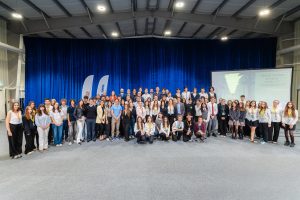
The Time to Play initiative continues to build a community of schools committed to active school mobility, bringing together students, parents, schools, experts and public authorities to identify and propose concrete solutions for safer journeys to school.
Safer journeys to school require infrastructure, collaboration and concrete decisions. But they also require people who are willing to ask why things are not working and work together to find a way forward.
And when students become part of this dialogue, civic education moves beyond theory and becomes a lived experience.